Best AI Tools for Teachers in 2026: Save Time, Teach Better
Best AI Tools for Teachers in 2026: Save Time, Teach Better
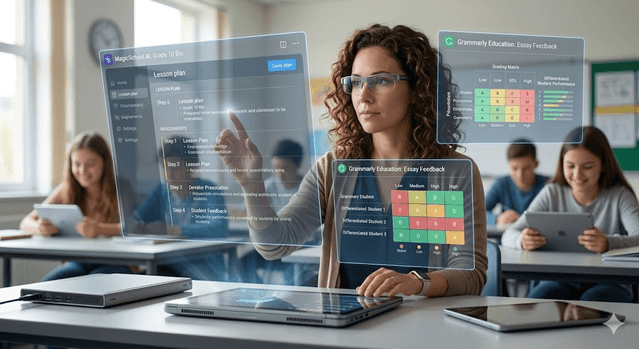
Teaching has always been one of the most demanding professions — demanding in time, emotional energy, and the sheer volume of administrative work that accompanies every hour of classroom instruction. AI tools have not changed what great teaching looks like, but the best ones in 2026 are genuinely reducing the hours teachers spend on grading, planning, communication, and documentation.
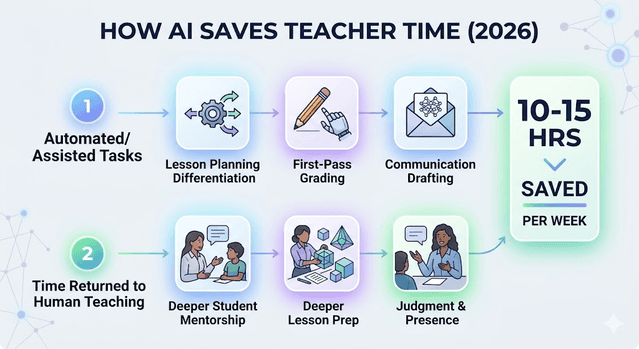
The data is meaningful. Teachers who use AI tools across multiple categories report saving between 10 and 15 hours per week on average. That time does not disappear — it returns to direct student interaction, deeper lesson preparation, and the parts of teaching that require human judgment, mentorship, and presence.
This guide focuses on AI tools that are actually being used in classrooms in 2026, with honest assessments of where each tool delivers value and where the limitations are.
What AI is actually doing in classrooms in 2026
The early phase of AI in education involved teachers exploring general-purpose chatbots and trying to adapt them for classroom use. That phase has ended. What has replaced it is a clearer picture of which specific tasks benefit most from AI assistance and which still require human expertise.
According to RAND survey data supplemented by a 2026 EdSurge analysis of 1,800 educators, teachers predominantly use AI for professional and administrative tasks rather than for direct student instruction. The highest-impact categories are lesson planning and differentiation, first-pass grading and feedback generation, parent communication drafting, and creating supplementary learning materials.
Critically, the most important metric is not which tool is technically most advanced — it is which tools are still being used by teachers six months after adoption. Tools that save time without adding complexity tend to survive. Tools that require teachers to change their entire workflow, or that generate output needing extensive manual correction, get abandoned quickly.
1) MagicSchool AI — Best all-in-one platform for teachers
MagicSchool AI has emerged as one of the most widely adopted teacher-specific AI platforms in 2026. Built specifically for educators rather than adapted from a general-purpose tool, it includes over 60 AI tools covering lesson planning, differentiation, quiz generation, rubric creation, accommodation letters, email drafting, and more — all within a single interface designed around how teachers actually work.
The platform generates differentiated materials for students at different learning levels from the same lesson plan, which previously required teachers to manually create multiple versions of every worksheet and assessment. Teachers can input a lesson objective and receive materials adapted for English language learners, students with IEPs, and advanced learners simultaneously.
Best for: Any teacher looking for a comprehensive AI assistant designed around teaching workflows. Particularly valuable for teachers managing diverse classrooms with students at different levels.
Pricing: Free tier available. Premium plans for additional features and unlimited generation.
2) Brisk Teaching (Google Classroom integration) — Best for Google Workspace schools
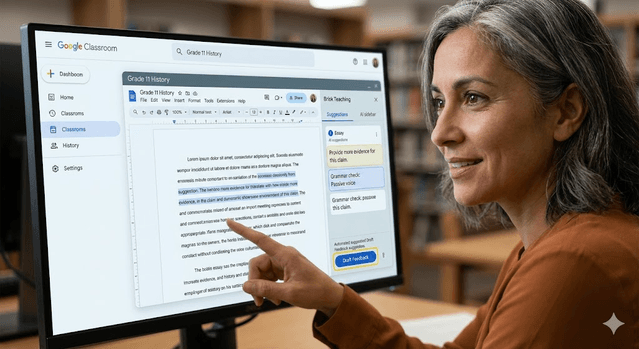
For schools already using Google Classroom, Gmail, and Google Docs as their primary infrastructure, Brisk Teaching integrates directly into these tools and provides AI assistance without requiring teachers to switch between platforms.
Brisk provides quick feedback on student work within Google Docs, helps teachers create supplementary materials, and assists with administrative tasks — all accessible directly within Google's environment. Teachers managing multiple classes or subjects particularly benefit from the reduced switching cost.
Best for: Teachers in schools running Google Workspace. Any educator who wants AI assistance embedded in existing tools rather than a separate platform.
Pricing: Free tier with core features. Brisk Premium at $50/year for unlimited AI generations. District licenses available.
3) Kahoot! (AI-enhanced version) — Best for student engagement and formative assessment
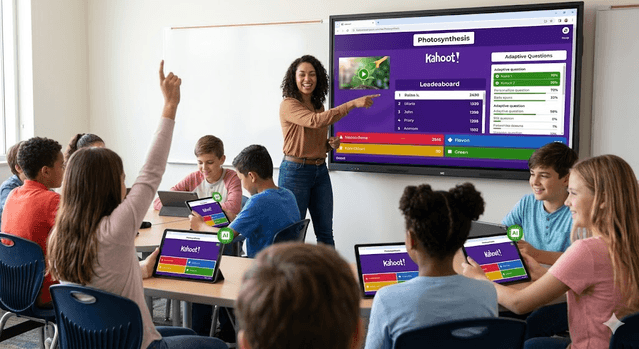
Kahoot! has evolved significantly from its original quiz-game format. In 2026, it includes AI-powered quiz generation from any text or learning objective, adaptive learning paths that adjust question difficulty based on student responses, and engagement analytics that show teachers which concepts students are struggling with in real time.
For formative assessment — checking understanding quickly without the overhead of a formal test — Kahoot!'s AI-enhanced version is one of the most effective tools available. The game format keeps engagement high, the AI reduces the time required to create good questions, and the analytics give teachers actionable data about where to focus instruction next.
Best for: K-12 teachers who need fast, engaging formative assessment. Review sessions, end-of-unit checks, and live classroom engagement.
Pricing: Free basic plan. Premium plans for advanced analytics and features.
4) Grammarly for Education — Best for writing feedback at scale
One of the most time-consuming parts of teaching English, writing, and humanities is providing detailed feedback on student essays and written assignments. Grammarly's education-focused version helps teachers by providing students with immediate, substantive writing feedback — on grammar, clarity, structure, and tone — before the teacher even reads the assignment.
When students receive and act on AI feedback before submission, the quality of work teachers receive improves, and the feedback teachers need to provide becomes more targeted and higher-level rather than correcting basic errors. This compresses the grading cycle significantly.
Best for: English, writing, and humanities teachers. Any teacher assigning substantial written work who wants to improve student output quality before grading.
Pricing: Individual educator plans and school-level licensing available.
5) Curipod — Best for interactive lesson creation
Curipod generates complete interactive lessons from a topic or learning objective in minutes. Teachers enter what they want students to learn, and Curipod produces a full lesson including instruction slides, discussion prompts, polls, and reflection activities. Teachers can edit and customize the generated lesson before using it.
What makes Curipod particularly useful is the interactive format. Rather than producing a static slide deck, it generates a lesson that students actively participate in — responding to polls, submitting questions, and receiving differentiated responses.
Best for: Teachers who want interactive, student-centered lessons but lack the time to build them from scratch. Strong for first-year teachers building their curriculum library.
Pricing: Free tier available with core features.
6) ClassDojo (with AI features) — Best for classroom management and family communication
ClassDojo connects teachers, students, and families through a single platform. Its AI features in 2026 include automated behavior tracking, engagement analytics, and AI-generated parent communication summaries. For teachers managing challenging classrooms or maintaining consistent communication with families, it reduces the administrative burden significantly.
The parent communication feature is particularly valuable. Teachers can describe classroom events, student progress, or concerns, and the AI drafts appropriate, professional communication that can be reviewed and sent with minimal editing.
Best for: K-8 teachers managing classroom behavior, family communication, and community building.
Pricing: Free for core features. ClassDojo Plus at $7.99/month for premium features.
7) Diffit — Best for differentiated reading materials
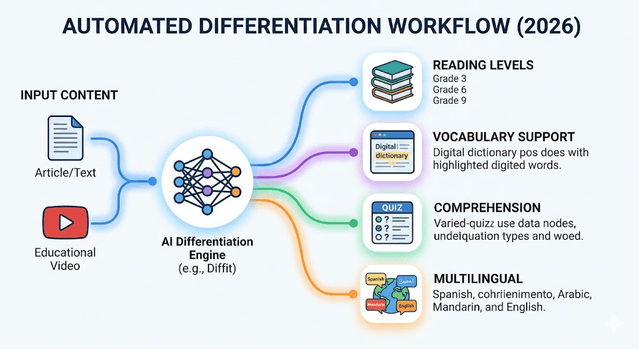
Reading level differentiation is one of the most time-intensive tasks in teaching. Diffit solves this specifically: teachers input any text, article, or video, and the platform generates reading materials adapted for different grade levels and reading abilities — including vocabulary support, comprehension questions, and discussion prompts for each level.
For teachers in diverse classrooms where students read at significantly different levels, Diffit transforms a multi-hour differentiation task into minutes. It supports multiple languages, making it particularly useful for ESL and multilingual classrooms.
Best for: Literacy teachers, social studies teachers, and any educator working with students at diverse reading levels.
Pricing: Free tier available. Paid plans for higher usage limits.
What teachers should know before adopting AI tools
Adoption works best when it targets a specific bottleneck first. Teachers who try to use AI for everything simultaneously often report the tools adding complexity rather than removing it. Start with one task — quiz generation, or first-draft parent emails, or lesson material creation — and use one tool consistently for four to six weeks before expanding.
Output review is non-negotiable. AI-generated quizzes occasionally contain factual errors. Lesson plans may not align perfectly with specific curriculum standards without adjustment. Parent communications may use inappropriate tone for individual family situations. All AI output should be reviewed before use with students or families.
Privacy deserves consideration. Schools should verify that tools being used comply with FERPA (in the US) and equivalent protections in other jurisdictions before uploading identifiable student data. Most reputable education AI platforms publish their data handling policies clearly; reading them before adoption is important.
The teacher-AI relationship that works
The most effective use of AI tools in classrooms treats AI as a capable administrative assistant, not a replacement for teacher judgment. The mentorship, adaptive response to individual students, and relationship-building that defines excellent teaching cannot be automated. What can be automated — question generation, rubric creation, document drafting, first-pass feedback — frees teachers to spend more time on what only a human educator can do.
The 69% of teachers who report that AI tools have improved their teaching methods, according to a CDT research report, are concentrated among those who adopted tools intentionally for specific tasks rather than broadly or under institutional pressure.
Final thoughts
The best AI tools for teachers in 2026 are the ones that become invisible in your workflow — handling repetitive tasks so efficiently that you stop noticing the time saved and simply experience having more capacity for teaching. Start with one tool that addresses your biggest weekly time sink, measure whether it genuinely reduces that burden, and build from there.
MagicSchool AI or Brisk Teaching are the best starting points for most educators. Add Kahoot! for student engagement, Grammarly for writing feedback, and Diffit or Curipod for specific lesson design needs. This combination covers the highest-value AI use cases in teaching without adding unnecessary complexity.
Get Weekly AI + Tech Updates
Receive practical AI tools, workflows, and hand-picked resources in one concise weekly email.
AI & Software Writer
Akash Kumar is a software engineer with a master's degree in computer science. He writes about AI tools, software development, and emerging tech, drawing on his engineering background to test new AI products hands-on and explain how they fit into real development workflows for developers, students, and creators.